Dragon Money: Difference between revisions
(save) |
(writing saved) |
||
| Line 1: | Line 1: | ||
Nation or Mint / Nation | Date | Denomination (or No Denomination) | % silver (or other metal) | Weight in troy oz.| Design | Finish, if notable; e.g. antiqued, proof, reverse proof, cast|) | obverse or reverse | Nation or Mint / Nation | Date | Denomination (or No Denomination) | % silver (or other metal) | Weight in troy oz.| Design | Finish, if notable; e.g. antiqued, proof, reverse proof, cast|) | obverse or reverse | ||
== The Dragon == | |||
The dragon is generally described as a mythical beast, a sort of fantasy creature, varying in appearance by region, and imagined out of bits and pieces of snakes, crocodiles, fishes, bats, sea-horses, lions, and what-have you. Some scholars, however, believe that dragons were never conceived of as "mythical," but rather that they represent early, pre-scientific encounters human artists had with fossilized dinosaurs, and their variations in appearance reflect an honest attempt to reconstruct some sort of uniform saurian anatomy from the fragmentary fossils of many species -- long-necked, short-necked, gracile, stocky, winged, and terrestrial. This theory accounts for the fact that dragons of various types appear in far-apart areas of the world, and that there are, in a sense, "regional" dragons in art. | |||
=== Asian Dragons === | |||
The Asian dragon, a sinuous, reptilian beast, has a long history as a religious, mythical, astronomical, and astrological figure. This dragon may be associated with water, or may flay hrough the sky with small wings. The role of the Asian dragon, his guardianship of a precious flaming pearl, and his titular rulership of every 12th year of the Chinese zodiac are well known, even to non-Asians. If nothing more, they will encounter the dragon on Chinese restaurant menus, where he stands out because he shares a spot on the Lunar New Year cycle with eleven other animals, all of whom are identifiable living species, while he is a creature of unusual appearance and spiritual origin. Each Asian New Year actually marks the approximate time when the planet Jupiter, which follows a 12-year cycle of repeated movement, enters a new sector of the sky. Although Jupiter's motion is being references, the fNew Year estival itself is determined by a Lunar calendar, a very ancient way of marking time, and generally falls in the secular month of February. | |||
===European Dragons === | |||
The European dragon is also a reptile, but he is depicted as a terrestrial beast capable of short burts of flight by means of long-fingered, webbed wings. | |||
== Dragon Money == | == Dragon Money == | ||
Coins with images dragons on them, popularly referred to as dragon coins or dragon money, have a long history of production in Asia | Coins with images dragons on them, popularly referred to as dragon coins or dragon money, have a long history of production in Asia. | ||
[[File:Chinese-Dragon-long-character.jpg|left|thumb|300px|thumb|left|The Chinese character "long" or "lung" meaning "dragon"]] | [[File:Chinese-Dragon-long-character.jpg|left|thumb|300px|thumb|left|The Chinese character "long" or "lung" meaning "dragon"]] | ||
Revision as of 22:53, 28 January 2024
Nation or Mint / Nation | Date | Denomination (or No Denomination) | % silver (or other metal) | Weight in troy oz.| Design | Finish, if notable; e.g. antiqued, proof, reverse proof, cast|) | obverse or reverse
The Dragon
The dragon is generally described as a mythical beast, a sort of fantasy creature, varying in appearance by region, and imagined out of bits and pieces of snakes, crocodiles, fishes, bats, sea-horses, lions, and what-have you. Some scholars, however, believe that dragons were never conceived of as "mythical," but rather that they represent early, pre-scientific encounters human artists had with fossilized dinosaurs, and their variations in appearance reflect an honest attempt to reconstruct some sort of uniform saurian anatomy from the fragmentary fossils of many species -- long-necked, short-necked, gracile, stocky, winged, and terrestrial. This theory accounts for the fact that dragons of various types appear in far-apart areas of the world, and that there are, in a sense, "regional" dragons in art.
Asian Dragons
The Asian dragon, a sinuous, reptilian beast, has a long history as a religious, mythical, astronomical, and astrological figure. This dragon may be associated with water, or may flay hrough the sky with small wings. The role of the Asian dragon, his guardianship of a precious flaming pearl, and his titular rulership of every 12th year of the Chinese zodiac are well known, even to non-Asians. If nothing more, they will encounter the dragon on Chinese restaurant menus, where he stands out because he shares a spot on the Lunar New Year cycle with eleven other animals, all of whom are identifiable living species, while he is a creature of unusual appearance and spiritual origin. Each Asian New Year actually marks the approximate time when the planet Jupiter, which follows a 12-year cycle of repeated movement, enters a new sector of the sky. Although Jupiter's motion is being references, the fNew Year estival itself is determined by a Lunar calendar, a very ancient way of marking time, and generally falls in the secular month of February.
European Dragons
The European dragon is also a reptile, but he is depicted as a terrestrial beast capable of short burts of flight by means of long-fingered, webbed wings.
Dragon Money
Coins with images dragons on them, popularly referred to as dragon coins or dragon money, have a long history of production in Asia.

Historical Dragon Coins
Chinese Yuan, Japanese Yes, Korean Won
Modern Dragon Coins and Bullion
Text, blah blah blah especially since the year 2000. Of all the twelve lunar coins, the Dragon issues are by far the most popular, due to their long historical association with coinage.
The Lunar Calendar
The twelve lunar astrological animals, in order.
The five elements in order.
Quick year chart?
The Lunar Calendar on Coins and Bullion
Text .. and of these, the Year of the Dragon is always the most popular because not only is is a great Lunar New Yar gift, it is also a historical call-back to the old Dragon Money of China, Japan, and Korea.
Dragon Coins and Bullion by Nation
In addition to Asian nations, various countries have, since the year 2000, released lunar astrology keepsakes in the form of stamps and coins for each year's animal. With each 12-year lunar cycle since that time, it seems that more nations have joined the list of those who produce lunar coinage or stamps. Meanwhile, in European nations with their own traditions of dragons which are not connected to astrology, dragon coins may be issued at any time.
When photographing coins for sale, it seems to be the convention, both by mints and by secondary coin dealers, to consider the dragon as the image on the obverse or front of the coin, even though it is technically the image on the reverse or back of the coin. This is especially the case with nations that have a standard obverse, such as the portrait of a monarch: as merchants, the mints and coin dealers wish to present the dragon first, even though it is on the back of the coin. In other words, the dragons are usually the first image shown, and thus either larger or placed on left side of a composite photo. We have retained the proper designation of "reverse" for these dragons, while setting them in the left-hand position in our series for purpose of showcasing them.
AUSTRALIA
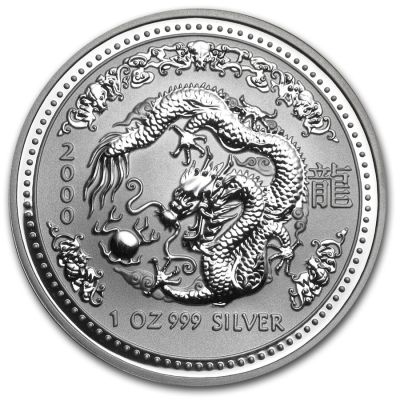
Australia, 2000, 1 Dollar, 1 Oz. of .999 Silver, Coin, reverse, Chinese Dragon, face-left, with pearl, "2000," 'lóng,' the Chinese character which means 'dragon,' and "1 OZ 999 Silver." Engraver was Ing Ing Jong. Perth Mint.
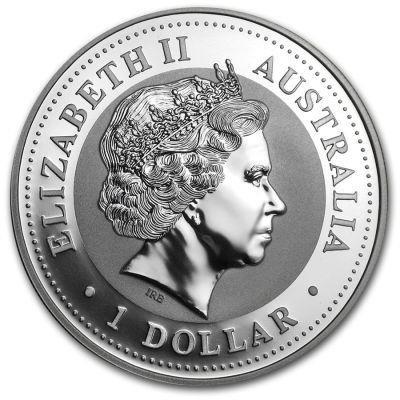
Australia, 2000, 1 Dollar, 1 Oz. of .999 Silver, Coin, obverse, Queen Elizabeth II (4th Portrait), face-right, "Elizabeth II," "Australia," and "1 Dollar;" "IRB" below the bust, the initials of the designer, Ian Rank Broadley.
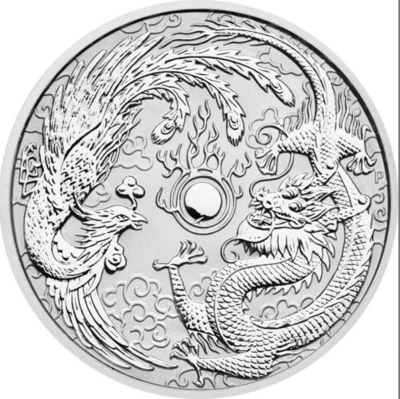
Australia, 2017, 1 Dollar, 1 Oz. of .999 Silver, Coin, reverse, a central flaming pearl orb between a Chinese Phoenix (left) and Dragon (right), a "P" on the right, near dragon's back left leg indicating the mint. No other letters. Perth Mint.
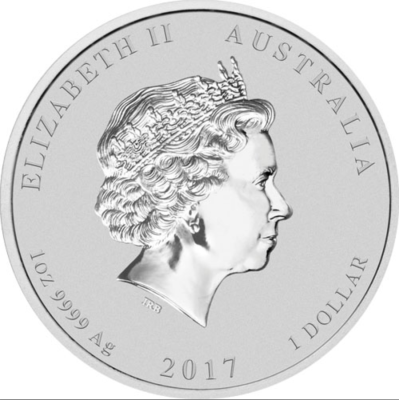
Australia, 2017, 1 Dollar, 1 Oz. of .999 Silver, Coin, obverse, Queen Elizabeth II (4th Portrait), face-right, "Elizabeth II," "Australia," "1 oz 9999 Ag," "2017," "1 Dollar." "IRB" below the bust, the initials of the designer, Ian Rank Broadley.
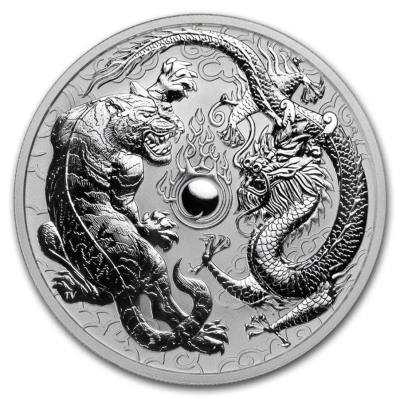
Australia, 2018, 1 Dollar, 1 Oz. of .999 Silver, Coin, reverse, a central flaming pearl orb between an Asian Tiger (left) and a Chinese Dragon (right), a "P" on the right, near dragon's back indicating the mint. No other letters. Perth Mint.
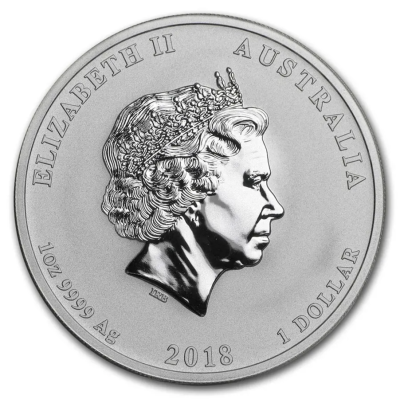
Australia, 2018, 1 Dollar, 1 Oz. of .999 Silver, Coin, obverse, Queen Elizabeth II (4th Portrait), face-right, "Elizabeth II," "Australia," "1 oz 9999 Ag," "2018," "1 Dollar." "IRB" below the bust, the initials of the designer, Ian Rank Broadley.
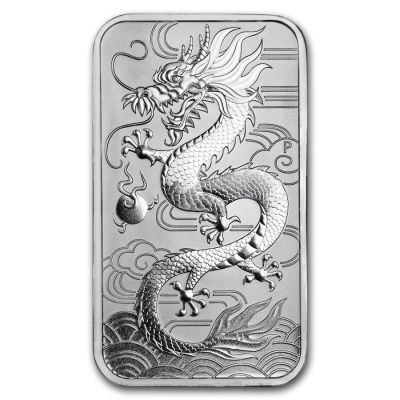
Australia, 2018, 1 Dollar, 1 Oz. of .999 Silver, Coin, reverse, Chinese Dragon floating above the water chasing a flaming pearl, a "P" on the right, in a nearby cloud, indicating the mint. No other letters. Perth Mint.
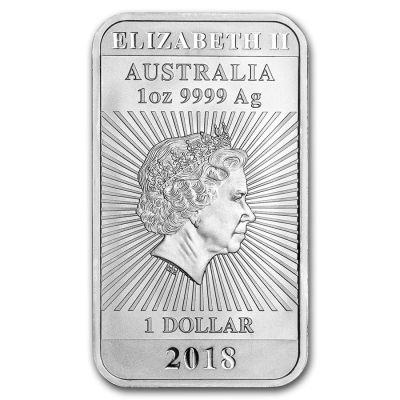
Australia, 2018, 1 Dollar, 1 Oz. of .999 Silver, Coin, obverse, Queen Elizabeth II (4th Portrait) in a radial emanation, face-right, "Elizabeth II," "Australia," "1 OZ 9999 Ag," "2018," "1 Dollar." "IRB" below the bust, the initials of the designer, Ian Rank Broadley.
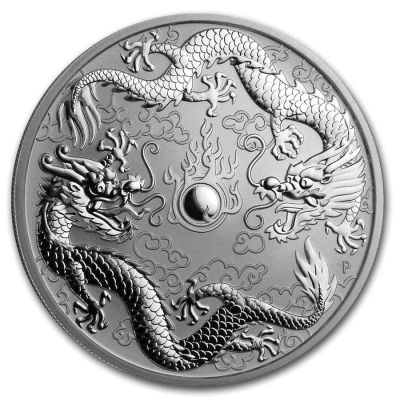
Australia, 2019, 1 Dollar, 1 Oz. of .999 Silver, Coin, reverse, a central flaming pearl orb between 2 Chinese Dragons, "JM" on the bottom claw of the left Dragon (indicating the designer, Jennifer McKenna), a "P" on the right, between the tail of one and the left front claws of the other, indicating the mint. Perth Mint.
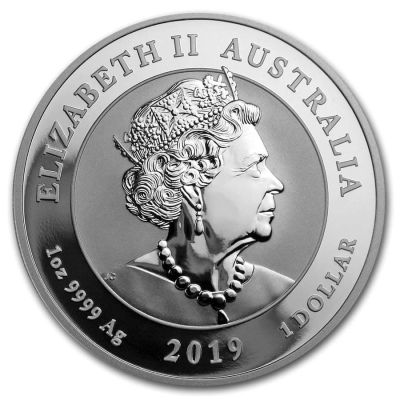
Australia, 2019, 1 Dollar, 1 Oz. of .999 Silver, Coin, obverse, Queen Elizabeth II (6th Portrait), face-right, "Elizabeth II," "Australia," "1 oz 9999 Ag," "2019," "1 Dollar;" "JC" to the left of the bust (for the engraver, Jody Clark).
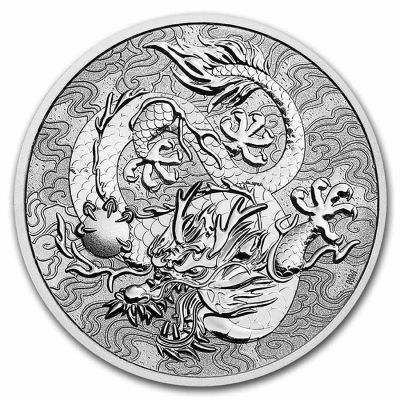
Australia, 2021, 1 Dollar, 1 Oz. of .999 Silver, Coin, reverse, Chinese Dragon, face-right, grasping a flaming pearl with its front right claws, "NM" on the right, near the Dragon's front left claws (for the engraver, Natasha Muhl). Perth Mint.
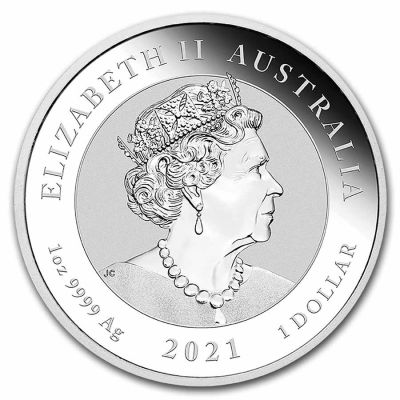
Australia, 2021, 1 Dollar, 1 Oz. of .999 Silver, Coin, obverse, Queen Elizabeth II (6th Portrait) face-right, "Elizabeth II," "Australia," "1oz 9999 Ag," "2021," "1 Dollar;" "JC" to the left of the bust (for the engraver, Jody Clark).
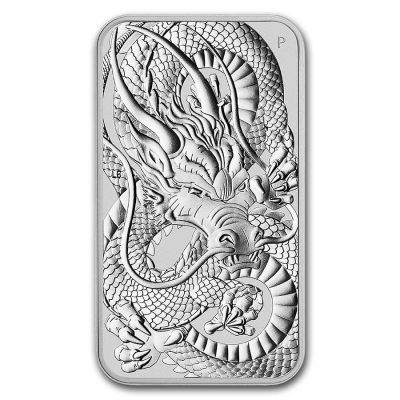
Australia, 2021, 1 Dollar, 1 Oz. of .999 Silver, Rectangular Coin, reverse, Chinese Dragon face-front, a "P" on the top right, indicating the mint. No other letters. Perth Mint.
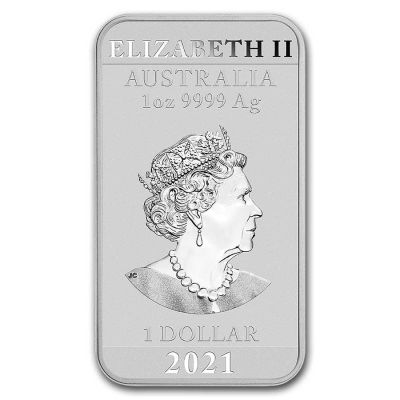
Australia, 2021, 1 Dollar, 1 Oz. of .999 Silver, Rectangular Coin, obverse, Queen Elizabeth II (6th Portrait) face-right, "Elizabeth II," "Australia," "1oz 9999 Ag," "2021," "1 Dollar;" "JC" to the left of the bust (for the engraver, Jody Clark).
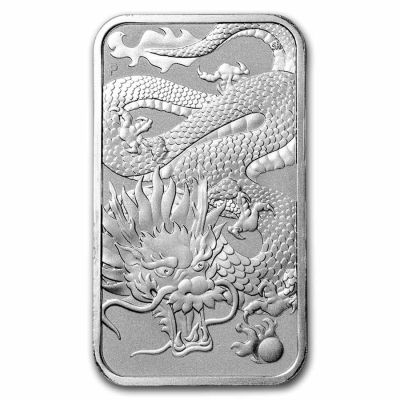
Australia, 2022, 1 Dollar, 1 Oz. of .999 Silver, Rectangular Coin, reverse, Chinese Dragon face-front chasing a flaming pearl at front right, a "P" on the top left, indicating the mint. No other letters. Perth Mint.
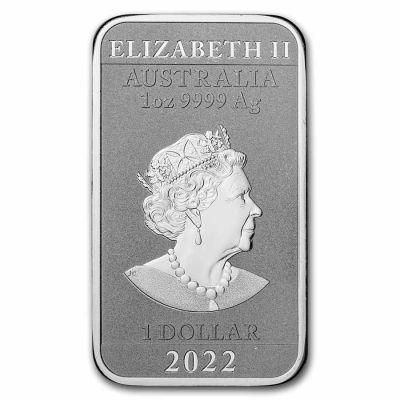
Australia, 2022, 1 Dollar, 1 Oz. of .999 Silver, Rectangular Coin, obverse, Queen Elizabeth II (6th Portrait) face-right, "Elizabeth II," "Australia," "1oz 9999 Ag," "2022," "1 Dollar;" "JC" to the left of the bust (for the engraver, Jody Clark).
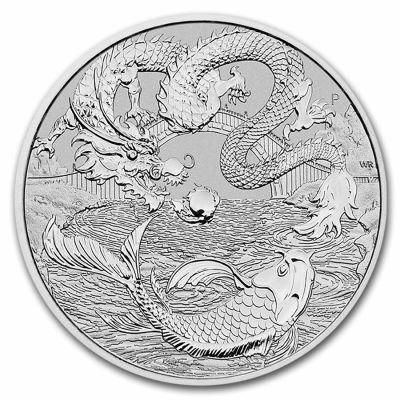
Australia, 2023, 1 Dollar, 1 Oz. of .999 Silver, Coin, reverse, a central flaming pearl with a Chinese Dragon above it about to bite it and below it a Koi fish leaping out of the river of which both are poised, an arched bridge; "P" for the issuing mint, "WR" (for the engraver, Wade Robinson). Perth Mint.
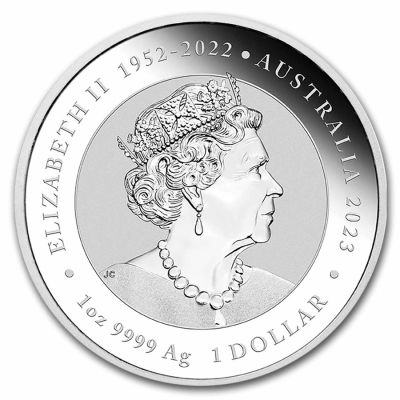
Australia, 2023, 1 Dollar, 1 Oz. of .999 Silver, Coin, obverse, Queen Elizabeth II (6th Portrait), face-right, "Elizabeth II 1952-2022," "Australia 2023," "1 oz 9999 Ag," "1 Dollar;" "JC" to the left of the bust (for the engraver, Jody Clark).
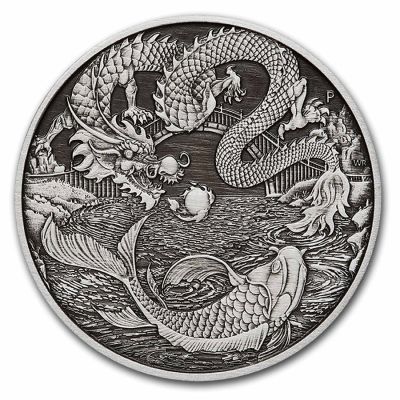
Australia, 2023, 1 Dollar, 1 Oz. of .999 Silver, Coin, reverse, Antiqued, a central flaming pearl with a Chinese Dragon above it about to bite it and below it a Koi fish leaping out of the river of which both are poised, an arched bridge; "P" for the issuing mint, "WR" (for the engraver, Wade Robinson). Perth Mint.
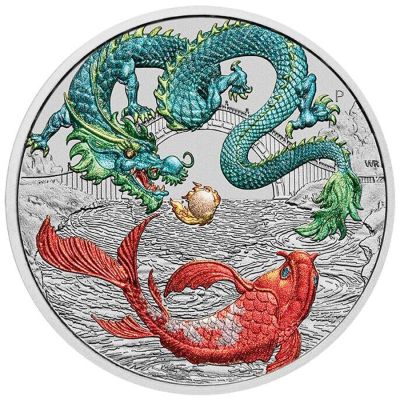
Australia, 2023, 1 Dollar, 1 Oz. of .999 Silver, Coin, obv/reverse, Colourized, a central flaming pearl with a Chinese Dragon above it about to bite it and below it a Koi fish leaping out of the river of which both are poised, an arched bridge; "P" for the issuing mint, "WR" (for the engraver, Wade Robinson). Perth Mint.
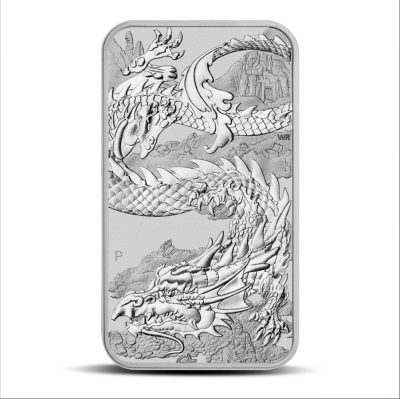
Australia, 2023, 1 Dollar, 1 Oz. of .999 Silver, Rectangular Coin, reverse, Chinese Dragon, face-left, behind and below statues and riches may be seen as the Dragon's hoard; "P" for the issuing mint, "WR" (for the engraver, Wade Robinson). Perth Mint.
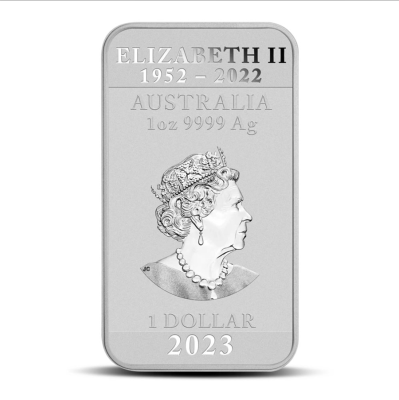
Australia, 2023, 1 Dollar, 1 Oz. of .999 Silver, Rectangular Coin, obverse, Queen Elizabeth II (6th Portrait) face-right, "Elizabeth II," "1952-2022," "Australia," "1oz 9999 Ag," "1 Dollar," "2023," "JC" to the left of the bust (for the engraver, Jody Clark).
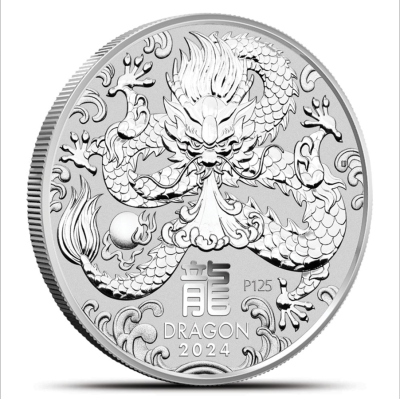
Australia, 2024, 1 Dollar, 1 Oz. of .999 Silver, Coin, reverse, Chinese Dragon, face-forward, with a flaming pearl in the left foreground; below, 'lóng,' the Chinese character which means 'dragon,' "P125" indicating the mint and its 125th anniversary; and middle right on a cresting wave, "IJ" (for the engraver, Ing Ing Jong). Perth Mint.
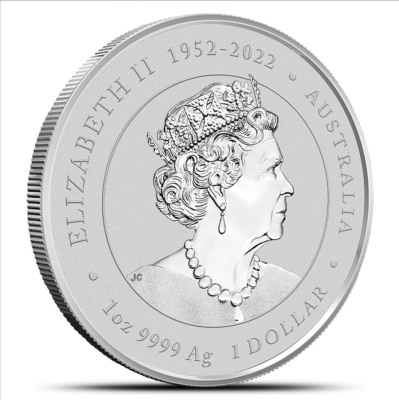
Australia, 2024, 1 Dollar, 1 Oz. of .999 Silver, Coin, obverse, Queen Elizabeth II (6th Portrait), face-right, "Elizabeth II 1952-2022," "Australia 2024," "1 oz 9999 Ag," "1 Dollar;" "JC" to the left of the bust (for the engraver, Jody Clark).
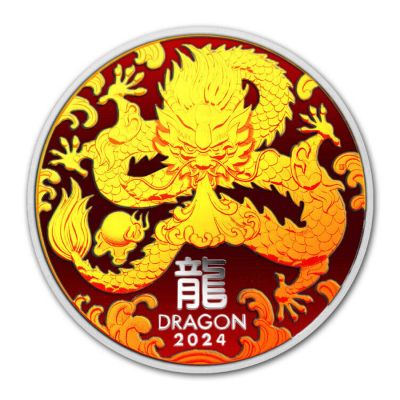
Australia, 2024, 1 Dollar, 1 Oz. of .999 Silver, Coin, reverse, Colourized, Chinese Dragon, face-forward, with a flaming pearl in the left foreground; below, 'lóng,' the Chinese character which means 'dragon,' "P125" indicating the mint and its 125th anniversary; and middle right on a cresting wave, "IJ" (for the engraver, Ing Ing Jong). Perth Mint.


CAMEROON
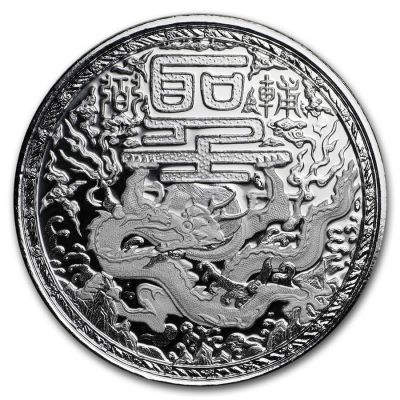
Cameroon, 2018, 50 Francs, 1 Oz. of .999 Silver, Coin, reverse, left-facing Chinese Dragon with 3 sets of ideograms: 'Sheng' (held by the dragon; 'divine' or 'imperial majesty'), 'Fu' (to add), and 'Bi' (to support). Scottsdale Mint.
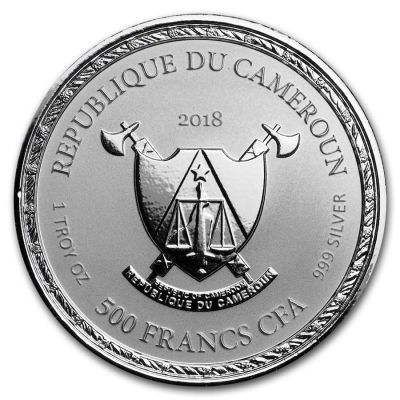
Cameroon, 2018, 50 Francs, 1 Oz. of .999 Silver, Coin, obverse, Cameroon Coat of Arms, "Republique Du Cameroun" (Republic of Cameroon), "2018," "1 Troy Oz," "999 Silver," "500 Francs CFA" (African Financial Community, or "Communauté Financière Africaine")."


CANADA
2012
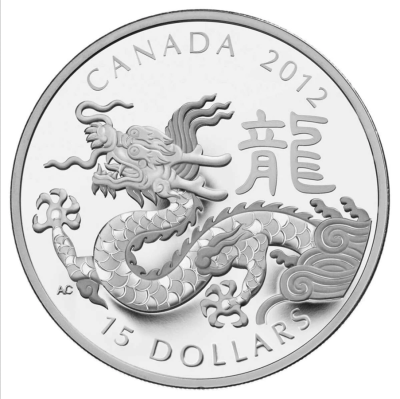
Canada, 2012, 15 Dollars, 1 Oz. of .999 Silver, Coin, obverse, left-facing dragon, emerging from mist and clouds, the Chinese character 'lóng' which means 'dragon' above and right, "Canada 2012", "15 Dollars," "AC" bottom left for designer Aries Cheung.
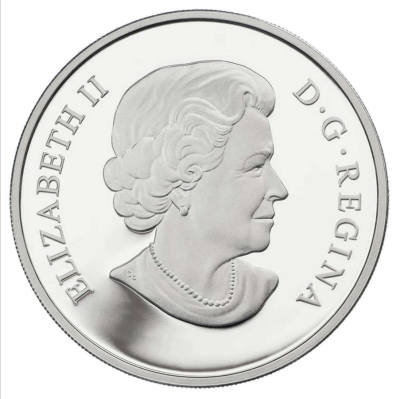
Canada, 2012, 15 Dollars, 1 Oz. of .999 Silver, Coin, obverse, Elizabeth II, face-right, "Elizabeth II, "D.G. Regina (Dei Gratia Regina; Queen by the Grace of God)," "SB" for the designer, Susan Blunt.


2020
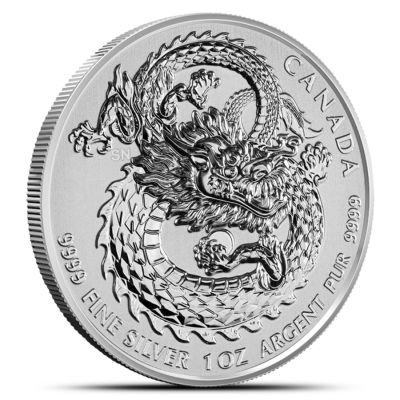
Canada, 2020, 5 Dollars, 1 Oz. of .999 Silver, Coin, reverse, High Relief, Chinese Dragon, face-front, "Canada," "9999 Fine Silver 1 OZ Argent Pur 9999", "SN" near the dragon's front right shoulder, for the designer, Simon Ng. Royal Canadian Mint, Ottawa.
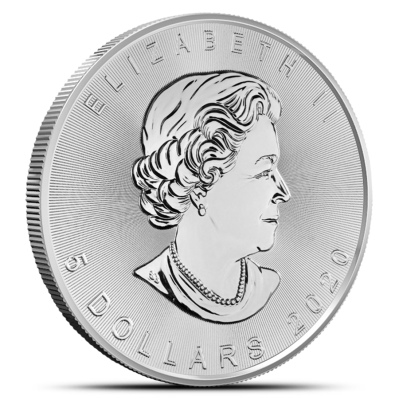
Canada, 2020, 5 Dollars, 1 Oz. of .999 Silver, Coin, obverse, Elizabeth II, face-right, "Elizabeth II, "5 Dollars," "2020," "SB" for the designer, Susan Blunt.


CHINA
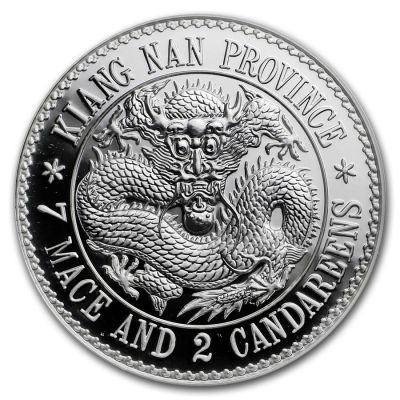
China, 2018, 1 Yuan, 1 Oz. of .999 Silver, Coin, reverse, Restrike from 1898, Chinese Dragon face-forward, clutching a pearl in its mouth, "Kiang Nan Province," "7 Mace and 2 Candareens (26.84 grams or .86 oz)." Kiang Nan Province Mint, China.
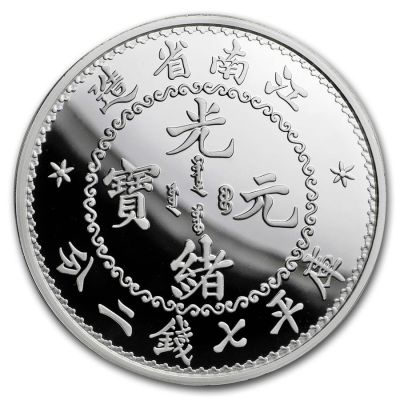
China, 2018, 1 Yuan, 1 Oz. of .999 Silver, Coin, obverse Restrike from 1898; Top Chinese: 'Made in Kiangnan Province' (indicating the mint); Bottom Chinese: '7 Mace amd 2 Candareens' (weight, see above); Center: Top-to-Bottom Chinese and (interior) Manchu: "Guangxu" (Emperor); Right-to-Left Chinese and (interior) Manchu: "Yuanbao" (original currency)). Kiangnan Province Mint, China.
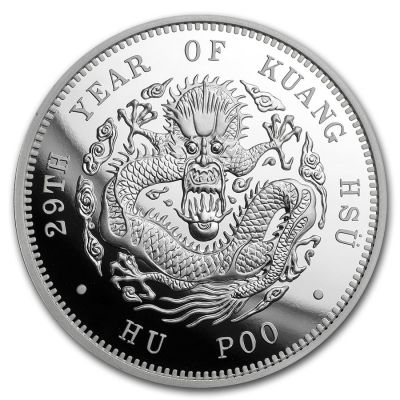
China, 2019, 1 Yuan, 1 Oz. of .999 Silver, Coin, reverse, Restrike from 1898, Chinese Dragon face-forward with a flaming pearl at its center, "29th Year of Huang Hsu," 29th Year of Guangxu (Emperor), "Hu Poo" (Board of Revenue); Chihli Province Mint, China.
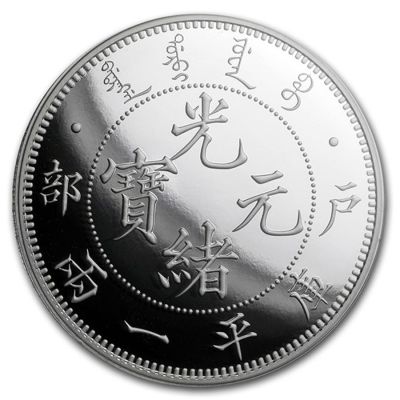
China, 2019, 1 Yuan, 1 Oz. of .999 Silver, Coin, obverse, Restrike from 1903; Top Manchu Right-to-Left: "Guangxu" (Emperor) "Yuanbao" (original currency); Center: Top-to-Bottom Chinese: Guangxu (Emperor); Center: Right-to-Left Chinese: "Yuanbao" (original currency)), Center Sides Right-to-Left Chinese: 'Board of Revenue' (minting authority), Bottom Right-to-Left Chinese: 'Worth 1 Mace (Qian).' Chihli Province Mint, China.
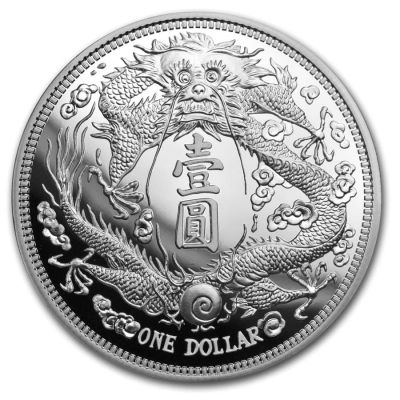
China, 2019, 1 Yuan, 1 Oz. of .999 Silver, Coin, obverse, Restrike from 1903?, Chinese Dragon winding about the central Chinese ideograms with flaming pearl at bottom, Top-to-Bottom: "One Dollar," (English) "One Dollar."
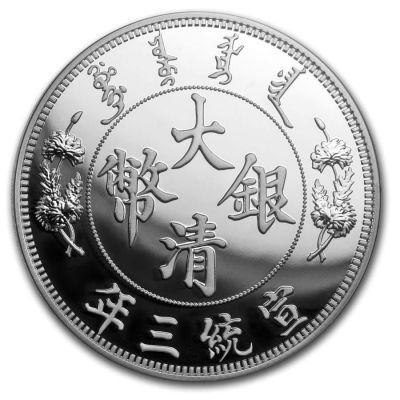
China, 2019, 1 Yuan, 1 Oz. of .999 Silver, Coin, obverse, Restrike from 1911; Manchu characters and Chinese ideogramps, with 2 flowers on the sides: Top Manchu Right-to-Left: 'Year 3 of Xuantong' (Emperor); Center: Top-to-Bottom Chinese: Great Qing's (dynasty); Center: Right-to-Left Chinese: 'silver currency,' Bottom Right-to-Left Chinese: 'Year 3 of Xuantong.' Central Mint in Tientsin.
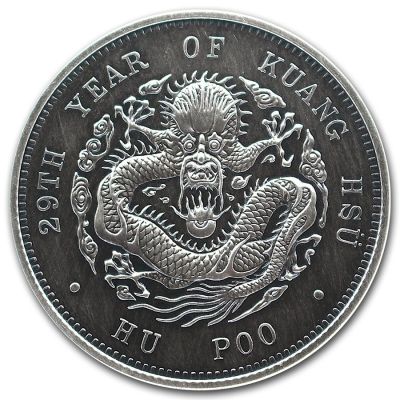
China, 2020, 1 Yuan, 1 Oz. of .999 Silver, Coin, reverse, Antiqued Restrike from 1898, Chinese Dragon face-forward with a flaming pearl at its center, "29th Year of Huang Hsu," 29th Year of Guangxu (Emperor), "Hu Poo" (Board of Revenue); Chihli Province Mint, China.
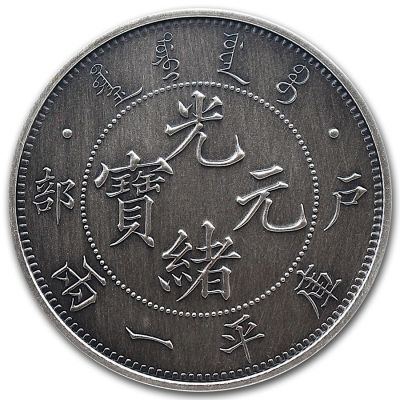
China, 2020, 1 Yuan, 1 Oz. of .999 Silver, Coin, obverse, Antiqued Restrike from 1903; Top Manchu Right-to-Left: "Guangxu" (Emperor) "Yuanbao" (original currency); Center: Top-to-Bottom Chinese: Guangxu (Emperor); Center: Right-to-Left Chinese: "Yuanbao" (original currency)), Center Sides Right-to-Left Chinese: 'Board of Revenue' (minting authority), Bottom Right-to-Left Chinese: 'Worth 1 Mace (Qian).' Chihli Province Mint, China.
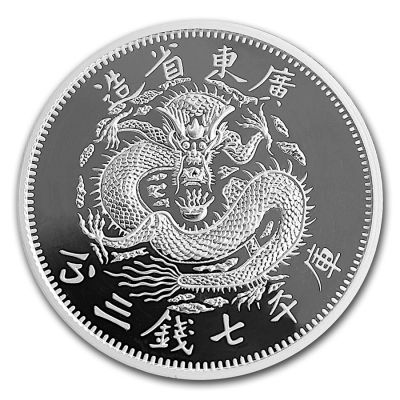
China, 2020, 1 Yuan, 1 Oz. of .999 Silver, Coin, reverse, Restrike of 1889, Coiled Dragon with flaming pearl at center, Chinese ideograms above and below, Top Right-to-Left: 'Made in Kwangtung Province,' Bottom Right-to-Left: 'Worth 7 Mace and 2 Candareens' (weight).
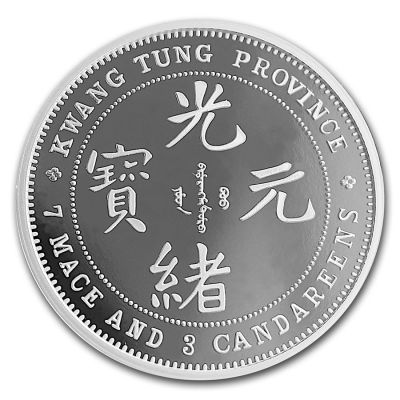
China, 2020, 1 Yuan, 1 Oz. of .999 Silver, Coin, reverse, Restrike of 1889, Chinese ideograms on inner circle and Manchu characters at center, Top-to-Bottom: "Guangxu" (Emperor), Right-to-Left: 'Yuanbao," (original currency), "Kwang Tung Province," "7 Mace and 2 Candareens" (weight). Originally from the Kwan Tung Province Mint.
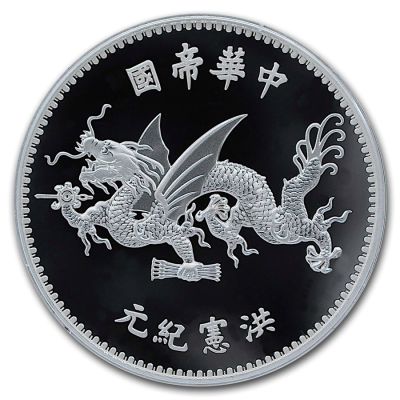
China, 2020, 1 Yuan, 1 Oz. of .999 Silver, Coin, reverse, Restrike of commemorative issue: Inauguration of Hongxian Emperor, Chinese Dragon flying left in profile, Chinese ideograms above and below, Top Right-to-Left: Empire of China," Bottom Right-to-Left: "The 1st Year of Hongxian." Engraver: Luigi Giorgi.
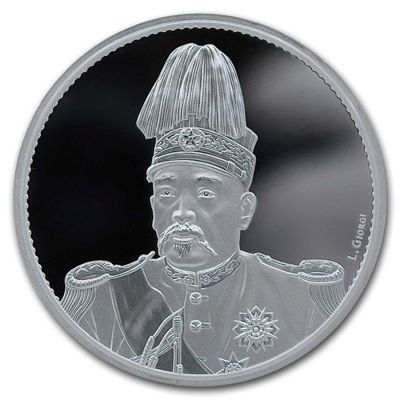
China, 2020, 1 Yuan, 1 Oz. of .999 Silver, Coin, reverse, Restrike of commemorative issue: Inauguration of Hongxian Emperor, Bust of Yuan Shihkai face-forward with military garb including a plumed hat. "L.Giorgi" for the engraver, Luigi Giorgi.
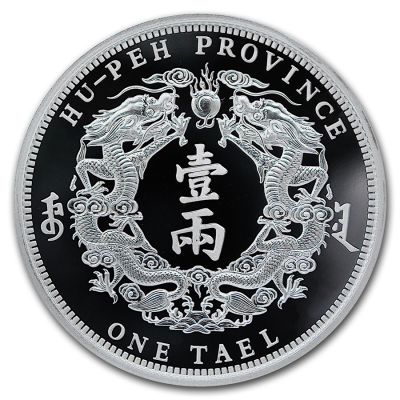
China, 2020, 1 Yuan, 1 Oz. of .999 Silver, Coin, reverse, Restrike of 1904, Two Chinese Dragons approach from either side the flaming pearl at the top; they surround 2 Chinese ideograms and 2 are at their backs one at each side: Sides Right-to-Left: "Hu-Peh Province," Center Top-to-Bottom: "One Tael."
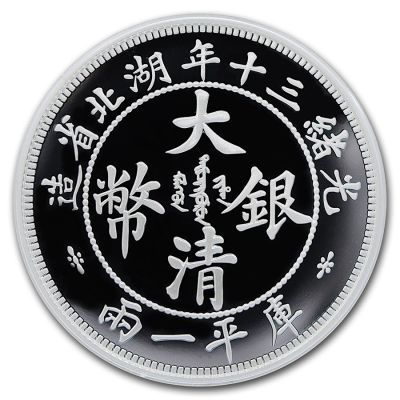
China, 2021, 1 Tael, 1 Oz. of .999 Silver, Coin, obverse, Restrike of 1904, Chinese ideograms inner circle and Manchu characters at center, Top-to-Bottom: "Great Qing" (Emperor), Right-to-Left: "Silver coin," Artist Initials, Issuing Mint.
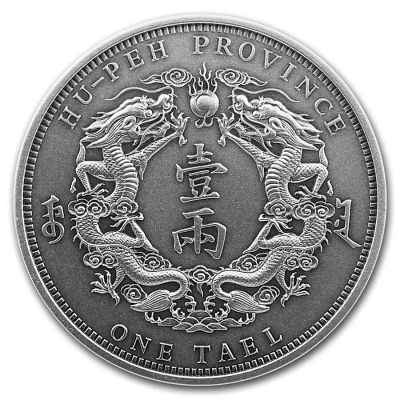
China, 2021, 1 Tael, 1 Oz. of .999 Silver, Coin, reverse, Antiqued Restrike of 1904, Two Chinese Dragons approach from either side the flaming pearl at the top; they surround 2 Chinese ideograms and 2 are at their backs one at each side: Sides Right-to-Left: "Hu-Peh Province," Center Top-to-Bottom: "One Tael," (English) "Hu-Peh Province," "One Tael." Artist Initials, Issuing Mint.
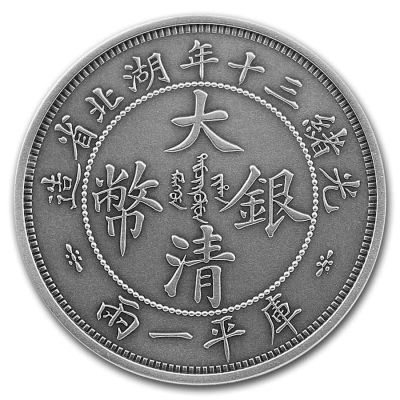
China, 2021, 1 Tael, 1 Oz. of .999 Silver, Coin, reverse, Antiqued Restrike of 1904, Chinese ideograms on inner circle and Manchu characters at centerTop Right-to-Left Chinese: "Made in Hupeh Province in Year 30 of Guangxu", Bottom Right-to-Left Chinese': "Worth 1 Liang" (weight)
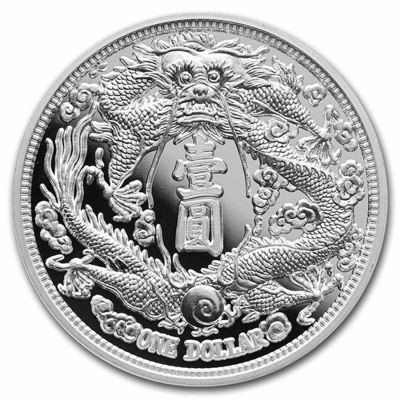
China, 2022, 1 Yuan, 1 Yuan, 1 Oz. of .999 Silver, Coin, obverse, High Relief Restrike from 1911, Chinese Dragon winding about the central Chinese ideograms with flaming pearl at bottom, Top-to-Bottom: "One Dollar," (English) "One Dollar."
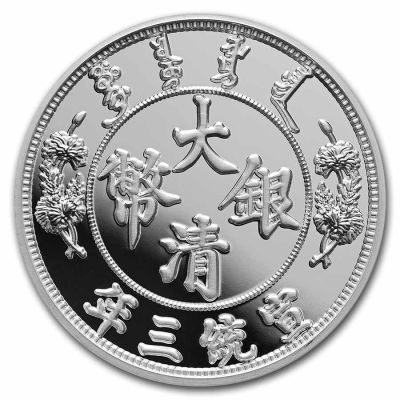
China, 2022, 1 Yuan, 1 Yuan, 1 Oz. of .999 Silver, Coin, obverse, Restrike from 1911; Manchu characters and Chinese ideogramps, with 2 flowers on the sides: Top Manchu Right-to-Left: 'Year 3 of Xuantong' (Emperor); Center: Top-to-Bottom Chinese: Great Qing's (dynasty); Center: Right-to-Left Chinese: 'silver currency,' Bottom Right-to-Left Chinese: 'Year 3 of Xuantong.' Central Mint in Tientsin.
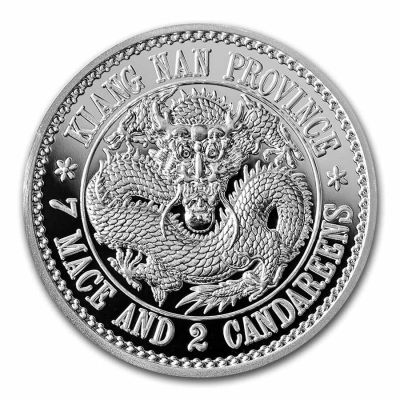
China, 2023, 1 Yuan, 1 Oz. of .999 Silver, Coin, reverse, Restrike from 1898, Chinese Dragon face-forward, clutching a pearl in its mouth, "Kiang Nan Province," "7 Mace and 2 Candareens (26.84 grams or .86 oz)." Kiang Nan Province Mint, China.
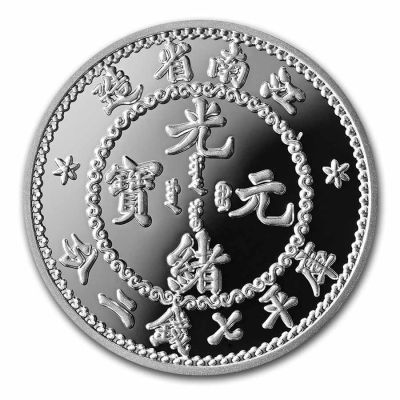
China, 2023, 1 Yuan, 1 Oz. of .999 Silver, Coin, obverse Restrike from 1898; Top Chinese: 'Made in Kiangnan Province' (indicating the mint); Bottom Chinese: '7 Mace amd 2 Candareens' (weight, see above); Center: Top-to-Bottom Chinese and (interior) Manchu: "Guangxu" (Emperor); Right-to-Left Chinese and (interior) Manchu: "Yuanbao" (original currency)). Kiangnan Province Mint, China.


ENGLAND
Royal Mint
2018
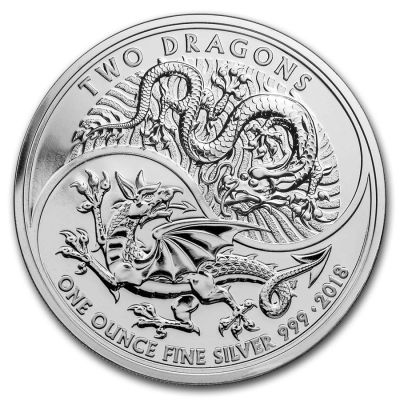
England, 2018, 2 Pounds, 1 Oz. of .999 Silver, Coin, reverse; 2 dragons inset to a Yin-Yang symbol: one at the top a Chinese dragon on a patterned background (black), one below a heraldic red dragon on a plain background (white); there is a "TN" identifying mark at the lower dragon's tail for the engraver Timothy Noad; "Two Dragons," "One Ounce Fine Silver 999 • 2018." Royal Mint.
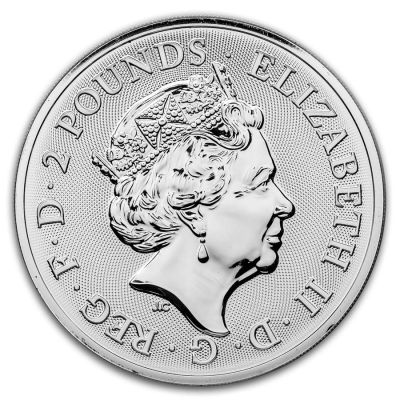
England, 2018, 2 Pounds, 1 Oz. of .999 Silver, Coin, obverse; the bust of Queen Elizabeth II of England; "Elizabeth II • D • G • Reg * F * D * 2 Pounds," (Dei Gratia Regina; by the Grace of God, Queen), Fidei Defensor (Defender of the Faith); "J.C" under the central bust (for the engraver, Jody Clark). Royal Mint.


2024
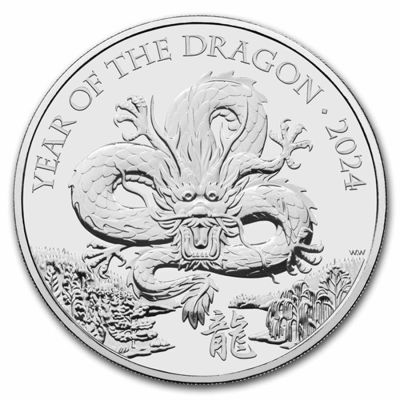
England, 2024, 5 Pounds, 1 Oz. of .999 Silver, Coin, reverse, Chinese dragon face-front, "Year of the Dragon • 2024" "W.W" (for engraver William Webb), and the Chinese character for dragon (long). Royal Mint.
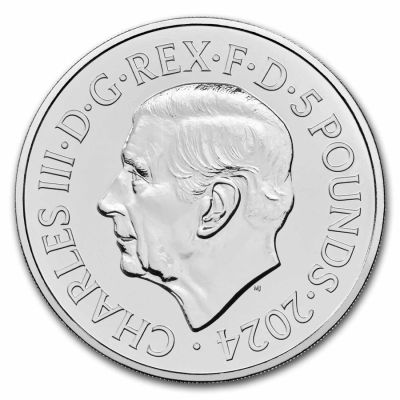
England, 2024, 5 Pounds, 1 Oz. of .999 Silver, Coin, obverse, a bust of King Charles III of England; "Charles III • D * G * Rex * F * D * 5 Pounds • 2024," Dei Gratia Rex (by the Grace of God, King), Fidei Defensor (Defender of the Faith), there are the letters MJ beneath the bust indicating the engraver, Martin Jennings. Royal Mint.


FIJI
A bit of history goes here. Many coins of Fiji bear the nation's Coat of Arms: A shield divided quarterly by the Cross of St. George; in the quadrants sugarcane, a coconut palm, a bunch of bananas, and a flying dove of peace bearing an olive branch , charged with a gold lion holding a cacao pod at the top, supported by twin Fijian warriors, one on each side, one armed with a barbed spear, the other with a pineapple club, topped with a canoe as the crest, at the bottom is the nation's motto: "Rerevaka na kalou ka doka na Tui" ("Fear God and honour the King" [1 Peter 2:17]). Adopted in 1908 by a British Royal Warrant, it has been the coat of arms of Fiji since that year, having been retained after independence in 1970.
2022
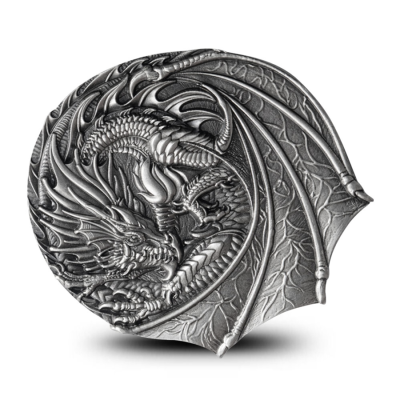
Fiji, 2022, One Dollar, 1 Oz. of .999 Silver, Coin, obverse, Antiqued, Dragon-Shaped, a forward-facing dragon of the Welsh or European variety, no lettering. "Dragons of the World" series.
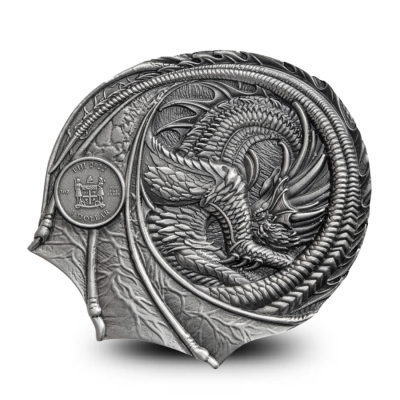
Fiji, 2022, One Dollar, 1 Oz. of .999 Silver, Coin, obverse, Antiqued, Dragon-Shaped, a Welsh or European dragon facing away; on the back of its wing, a circular coin-shape with the Fiji Coat of Arms, "Fiji 2023," "1 oz," ".999 Fine Silver," and "1 Dollar." "Dragons of the World" series.
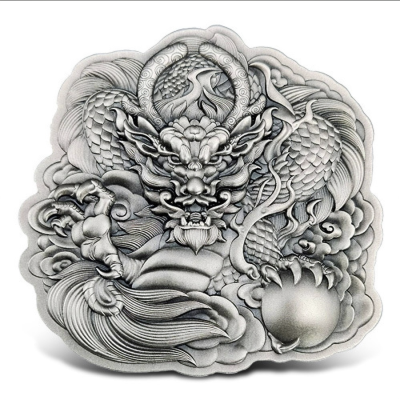
Fiji, 2022, One Dollar, 2 Oz. of .999 Silver, Coin, reverse, Antiqued, Dragon-Shaped, High Relief, a forward-facing dragon with pearl, no lettering. "Dragons of the World" series.
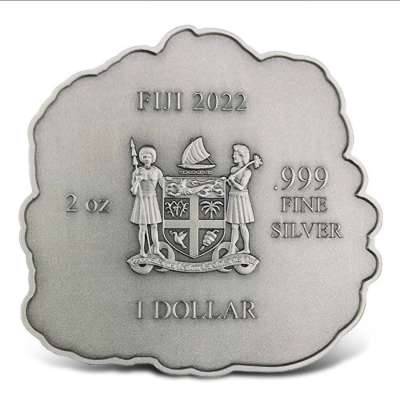
Fiji, 2022, One Dollar, 2 Oz. of .999 Silver, Coin, obverse, Antiqued, Dragon-Shaped, Fiji Coat of Arms, "Fiji 2022," "2 oz," ".999 Fine Silver," "1 Dollar." "Dragons of the World" series.


2023
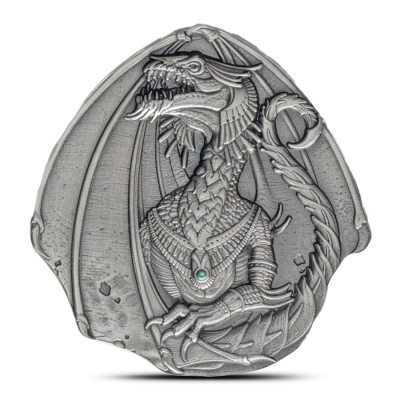
Fiji, 2023, One Dollar, 1 Oz. of .999 Silver, Coin, reverse, Antiqued, Dragon-Shaped, forward-facing dragon of an Egyptian motif in bearing of jewelry, no lettering. "Dragons of the World" series.
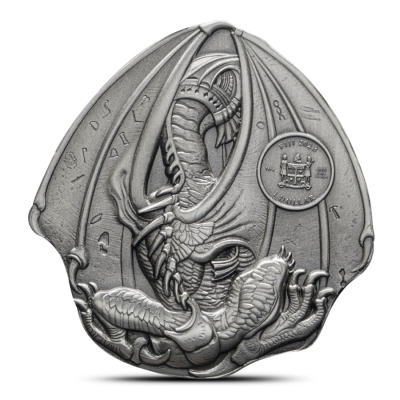
Fiji, 2023, One Dollar, 1 Oz. of .999 Silver, Coin, obverse, Antiqued, Dragon-Shaped, dragon facing away; a small circle on the back of the dragon's wing features the Fiji Coat of Arms, "Fiji 2023," "1 oz," ".999 Fine Silver," and "1 Dollar." "Dragons of the World" series.
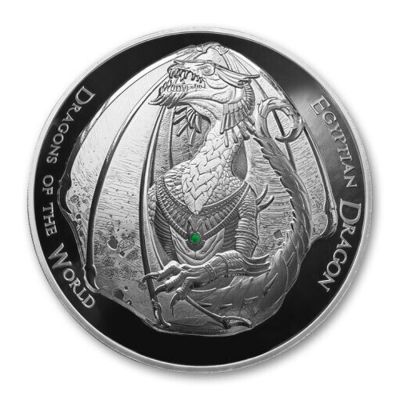
Fiji, 2023, Two Dollars, 2 Oz. of .999 Silver, Coin, reverse, Antiqued, forward-facing Egyptian dragon on a black background. "Dragons of the World," "Egyptian Dragon."
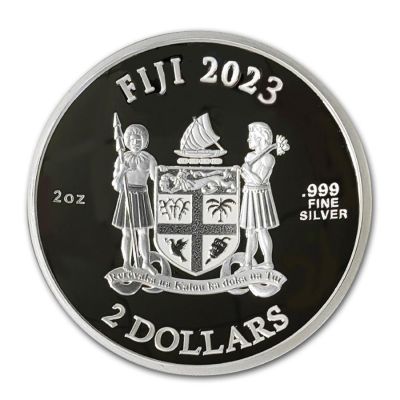
Fiji, 2023, Two Dollars, 2 Oz. of .999 Silver, Coin, obverse, Antiqued, Dragon-Shaped, the Fiji Coat of Arms on a black background, "Fiji 2023," "2 oz," ".999 Fine Silver," and "2 Dollars." "Dragons of the World" series.


2024
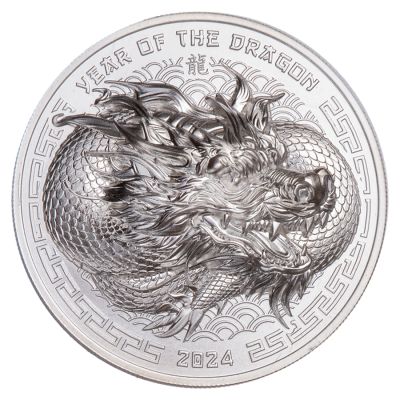
Fiji, 2024, Two Dollars, 1 Oz. of .999 Silver, Coin, reverse, Chinese Dragon's head is predominant and face-forward and right above a semi-circle background, , the coin is bordered by a Greek Key ring which are intersected by the English words; above the dragon inset to the background is the Chinese ideogram 'lóng,' meaning 'dragon;' "Year of the Dragon," "2024."
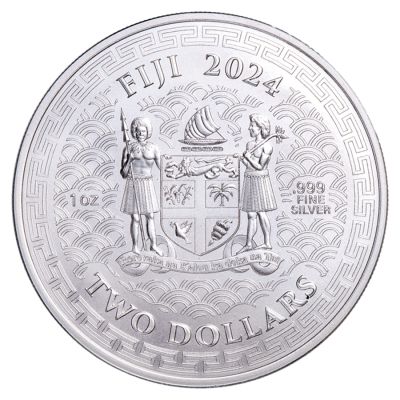
Fiji, 2024, Two Dollars, 1 Oz. of .999 Silver, Coin, obverse, the Fiji Coat of Arms above a semi-circle background, the whole is bordered by a Greek Key ring, "Fiji 2024," "1 oz," ".999 Fine Silver," "Two Dollars."
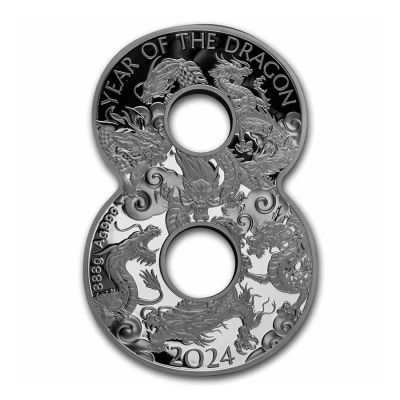
Fiji, 2024, 5 Dollars, 888 grams of .999 Silver, Eight-Shaped Coin, obverse, Eight Chinese Dragons decorate the unusually-shaped coin with interspersed clouds, "Year of the Dragon," "888g A9999," "2024."
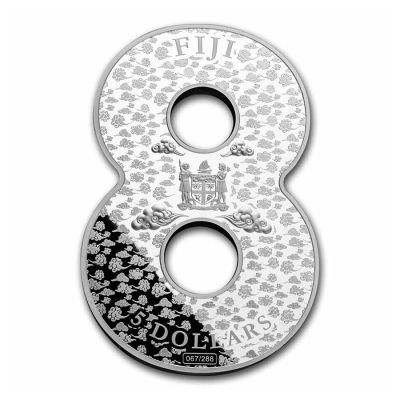
Fiji, 2024, 5 Dollars, 888 grams of .999 Silver, Eight-Shaped Coin, reverse, the Fiji Coat of Arms on a field of stylish clouds, "Fiji," "5 Dollars," "{#}/288."


FRANCE
A bit of history goes here.
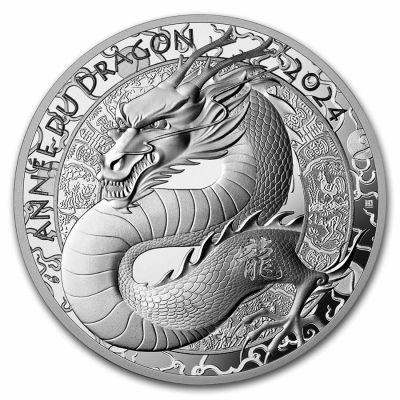
France, 2024 10 Euros, 1 Oz. of .999 Silver, Coin, reverse; In the outer ring: "Annee Du Dragon," ("Year of the Dragon"), "2024," a Chinese dragon passes through the second ring (tiled with engraved lunar animals and vegetation), which is replicated in small size on the obverse around a door, on the body of the dragon is engraved the Chinese character for "dragon" (long); right-hand side of the coin has a square mark indicating the engraver, Joaquin Jimenez.
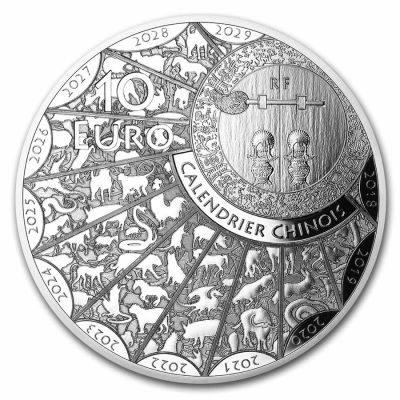
France, 2024 10 Euros, 1 Oz. of .999 Silver, Coin, obverse; inset to the top right of the coin is a door marked "R F" and barred closed with a Chinese rod lock; this door is inset to the same ring which appears on the reverse of this coin through which the dragon comes; emanating out from the door in a sun-rayed field is a sequence of twelve panes radially terminating in a year marked on its outer edge and featuring numerous variations of the lunar animals which are part of the twelve; "2018-2029," "Calendrier Chinois," "10 Euro."


JAPAN
Asahi Refining
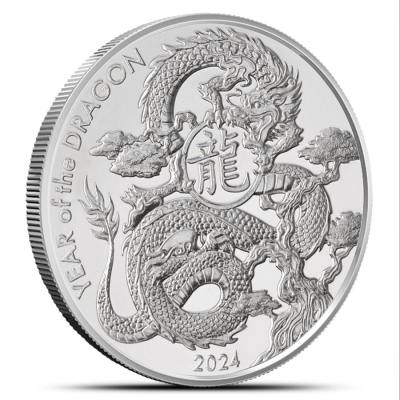
Japan, 2024, 1 Oz. of .999 Silver, Round, reverse, Chinese Dragon coiled about a Cypress tree and grasping within 3 of its 4 sets of claws a disk featuring the ideogram 'lóng' (dragon), "Year of the Dragon," "2024."
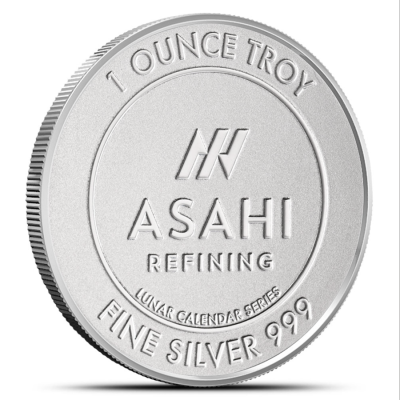
Japan, 2024, 1 Oz. of .999 Silver, Round, obverse, Asahi company logo and name, "1 Ounce Troy," "Asahi Refining," "Lunar Calendar Series," "Fine Silver 999," Asahi Refining Mint, Japan.


NIUE
A bit of history goes here. The national flag of Wales features the Welsh dragon as a heraldic symbol.
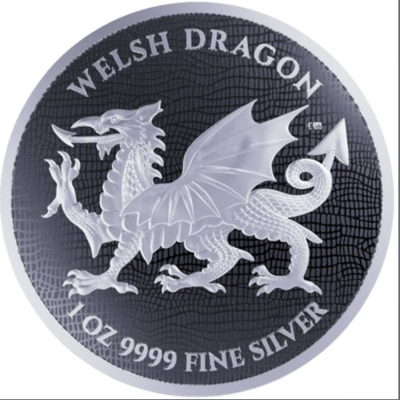
Niue, 2022, 2 Dollars, 1 Oz. of .999 Silver, Coin, reverse, Welsh flag's red dragon with right leg raised; "Welsh Dragon, 1 Oz 9999 Fine Silver." Between the wing and tail "EM" indicates the European Mint, where it was minted.
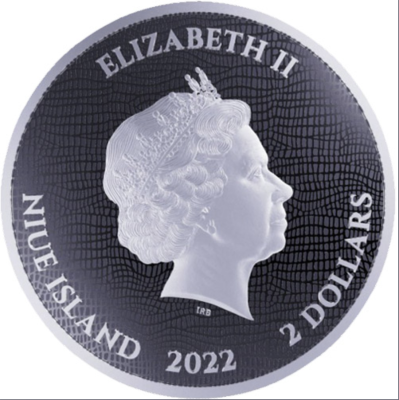
Niue, 2022, 2 Dollars, 1 Oz. of .999 Silver, Coin, obverse, Queen Elizabeth the II; "Elizabeth II," "Niue Island," "2022," "2 Dollars; "IRB" below the bust, the initials of the artist, Ian Rank Broadley.


RWANDA
A bit of history goes here. As of 2001, many coins of the Republic of Rwanda ("Repubulika Y'u Rwanda") bear the National emblem with the motto "Ubumwe-Umurimo-Gukunda Igihugu"" ("Unity, Work, Patriotism"), featuring a stem of Sorghum, a branch of a Coffee tree, and a traditional basket called an Agaseke. It also features 2 typical Rwandan shields, a cogwheel, and the Sun above; the whole is encircled by a square knot.
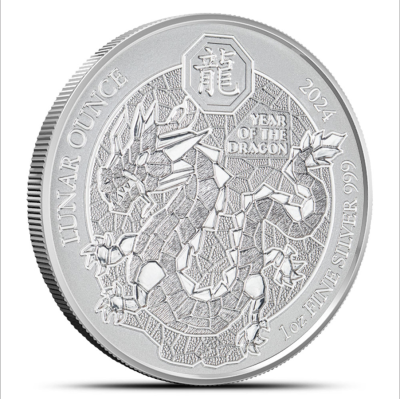
Rwanda, 2024, 50 Amafaranga (Francs), 1 Oz. of .999 Silver, Coin, reverse, Chinese dragon, left facing; "Lunar Ounce," "2024," "1 oz Fine Silver 999,"; above the dragon image are the words "Year of the Dragon" and the Chinese character for "dragon" (lóng) set into a double-octagon.
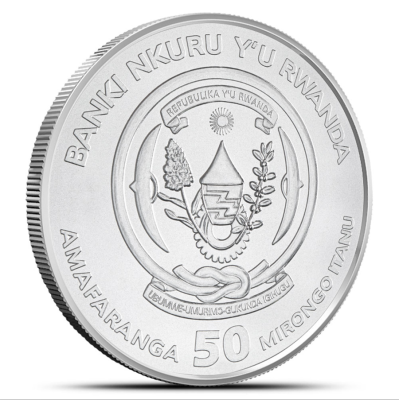
Rwanda, 2024, 50 Amafaranga (Francs), 1 Oz. of .999 Silver, Coin, obverse, the Emblem of the Republic of Rwanda (est. 2001); "Banki Nkuru Y'u Rwanda" (Central Bank of Rwanda), "Amafaranga 50" (50 Francs), "Mirongo Itanu," (10 Fives).


SAMOA
A bit of history goes here. Many coins of the Independent State of Samoa bear the nation's Coat of Arms with the motto "Fa'avae I Le Atua Samoa" (variously translated as "God is the Foundation of Samoa" or "Samoa is founded on God")
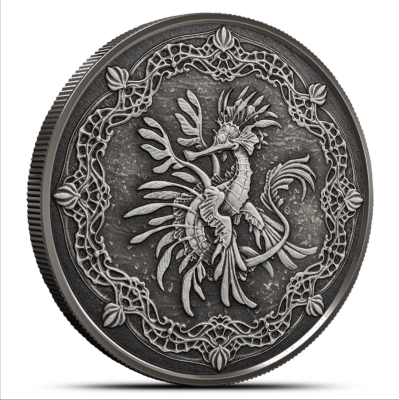
Samoa, 2022, 2 Tala, 1 Oz. of .999 Silver, Coin, reverse, Silver Sea Dragon Coin, Antiqued, a floating sea dragon.
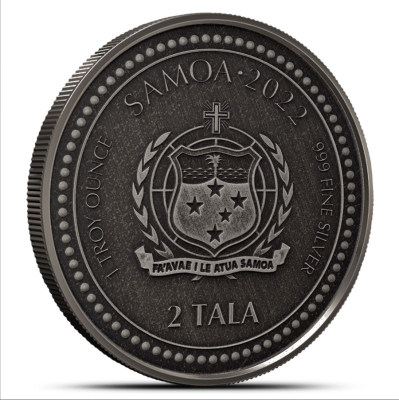
Samoa, 2022, 2 Tala, 1 Oz. of .999 Silver, obverse, the Coat of Arms of Samoa, Antiqued, "Samoa - 2022", "1 Troy Ounce .999 Fine Silver."
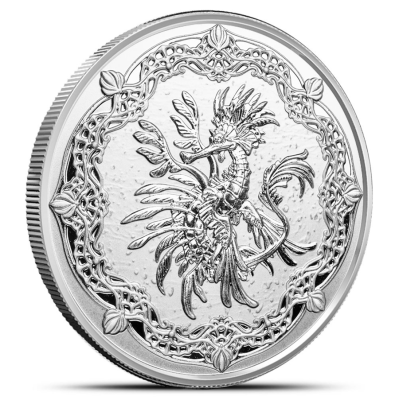
Samoa, 2022, 2 Tala, 1 Oz. of .999 Silver, Silver Sea Dragon Coin, reverse, a floating sea dragon.
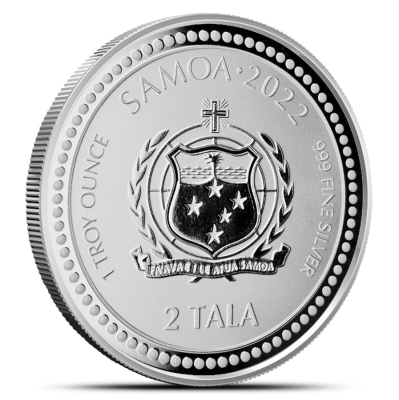
Samoa, 2022, 2 Tala, 1 Oz. of .999 Silver, obverse, the Coat of Arms of Samoa, "Samoa - 2022", "1 Troy Ounce .999 Fine Silver."


TCHAD
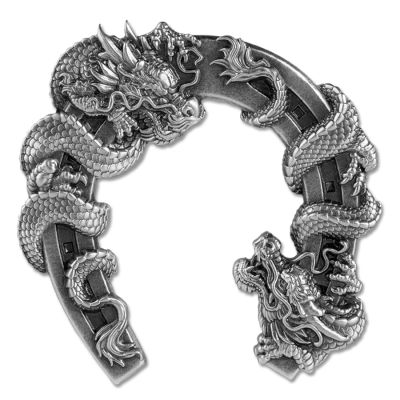
Tchad, 2023, 5000 Francs, 1 Oz. of .999 Silver, Horseshoe Coin, obverse, Two Chinese Dragons coiled around a horseshoe, the left head-up, the right head-down. No words on this side.
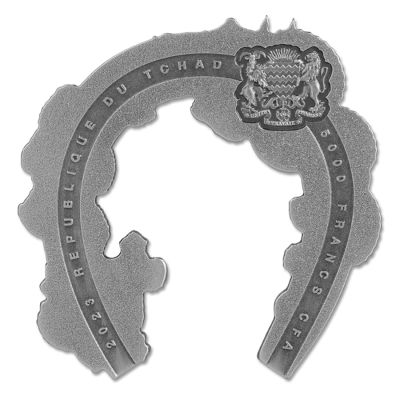
Tchad, 2023, 5000 Francs, 1 Oz. of .999 Silver, Horseshoe Coin, reverse, Antiqued, Horseshoe band inset to flat back of Dragons on reverse, with Republic of Tchad Coat of Arms at top right; on the band: "2023 Rebpublique Du Tchad," (Republic of Tchad), "5000 Francs CFA" (African Financial Community, or "Communauté Financière Africaine")."


UNITED STATES OF AMERICA
APMEX
2012
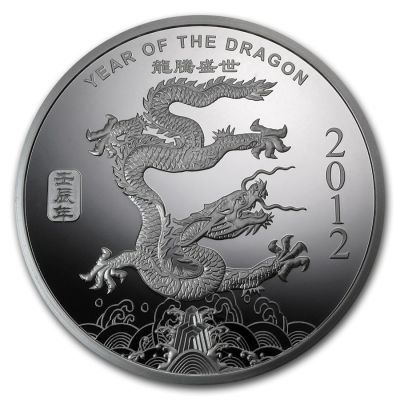
United States, 2012, 1 Oz. of .999 Silver, Round, reverse, Chinese Dragon coiled clock-wise with head at middle right, floating above stylized rock and sea, "Year of the Dragon," Right-to-Left Chinese: Year of the Dragon," Top-to-Bottom Chinese: "2012," (English) "2012."
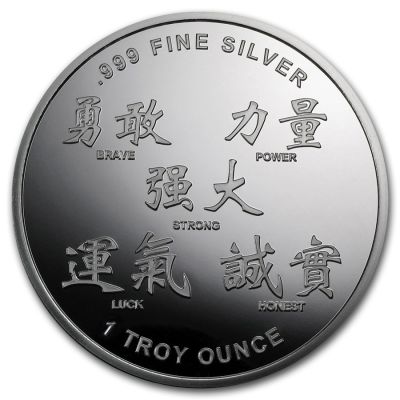
United States, 2012, 1 Oz. of .999 Silver, Round, obverse, Numerous Chinese ideograms all right-to-left with English words below them (words/translations): Bravery/Brave, Power, Strength, Luck, and Honesty/Honest, ".999 Fine Silver," "1 Troy Ounce." Minted by Apmex, USA.


2024
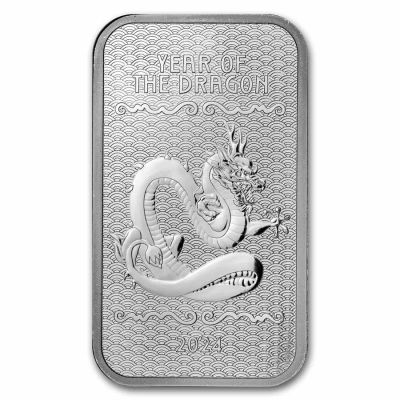
United States, 2024, 1 Oz. of .999 Silver, Bar (Rectangular), reverse, Chinese Dragon coiled floating above semi-circle background and separated by curlique dividers from the text and year, "Year of the Dragon," "2024; Series 2. APMEX Mint, USA.
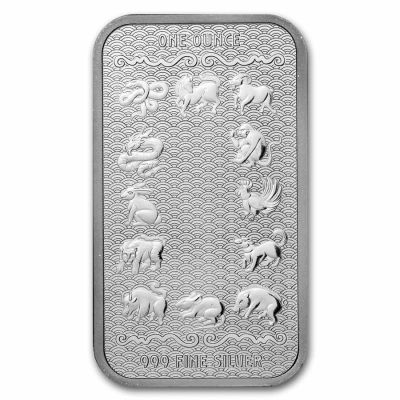
United States, 2024, 1 Oz. of .999 Silver, Bar (Rectangular), reverse, 12 Chinese astrological animals, including from top left: Snake, Horse, Goat, Monkey, Rooster, Dog, Pig, Rat, Ox, Tiger, Rabbit, and (fantasy) Dragon, above semi-circle background and separated by curlique dividers from the text and numbers; "One Ounce," "999 Fine Silver." APMEX Mint, USA.
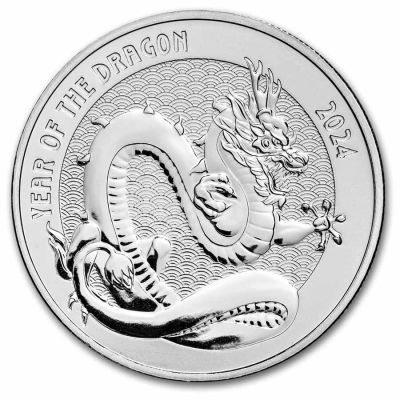
United States, 2024, 1 Oz. of .999 Silver, Round, obverse, Chinese Dragon coiled floating above semi-circle background, "Year of the Dragon," "2024; Series 2. APMEX Mint, USA.
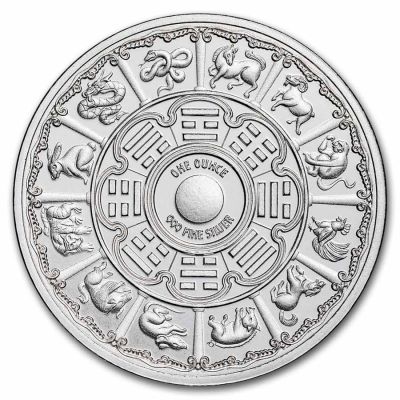
United States, 2024, 1 Oz. of .999 Silver, Round, obverse, 12 Chinese astrological animals on the outside ring, including from top left: Snake, Horse, Goat, Monkey, Rooster, Dog, Pig, Rat, Ox, Tiger, Rabbit, and (fantasy) Dragon, around an inner ring of the 8 trigrams (ba gua) in the "Later Heaven" arrangement; (Center) "One Ounce," "999 Fine Silver." APMEX Mint, USA.


JM Bullion
A bit of history goes here.
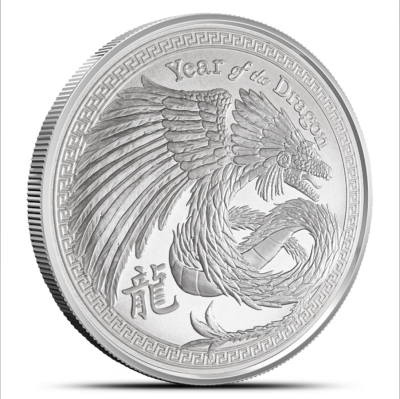
United States (JM Bullion), 2024, 1 Oz. of .999 Silver, Silver Round, reverse, circled by a small Chinese Meander, or Greek Key, "Year of the Dragon," Chinese character for Dragon ("Lóng").
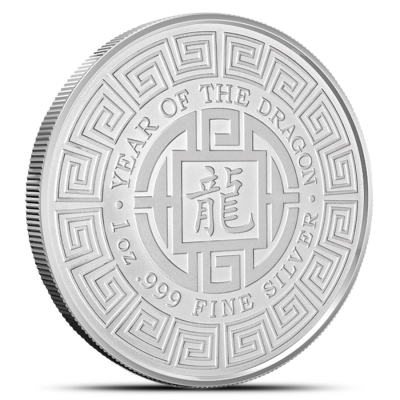
United States (JM Bullion), 2024, Silver Round, obverse, circled by a large Chinese Meander, or Greek Key, "Year of the Dragon," "1 oz .999 Fine Silver," centered inside a design reminiscent of the circular character for 'longevity' is the Chinese character for Dragon ("Lóng").


VANUATU
A bit of history goes here. Many coins of Vanuatu bear the nation's Coat of Arms: A Melanesian warrior, armed with a spear, standing before a mountain; behind him a boar's tusk and two leaves of the namele (coconut palm), on the scroll is the Vanuatu National Motto, "Log God Yuni Stanap" ("With God We Stand" equivalent to "In God We Trust"), surrounded by the words Ripablic Blong Vanuatu ("Republic of Vanuatu").
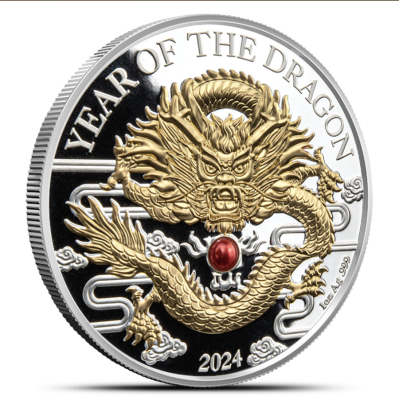
Vanuatu, 2024, 20 Vatu, 1 Oz. of .999 Silver, Lunar "Year of the Dragon" Coin, reverse, "1 oz. Ag. .999", a forward-facing dragon with .999 gold details and red metalized Pearl.
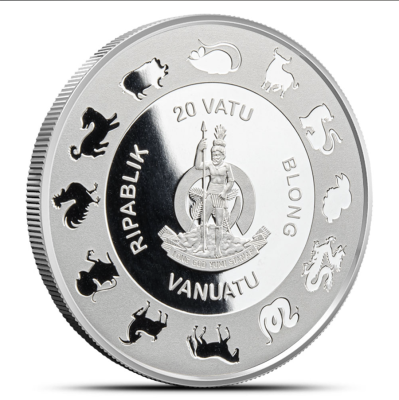
Vanuatu, 2024, 20 Vatu, 1 Oz. of .999 Silver, Lunar "Year of the Dragon" Coin, obverse, The Vanuatu Coat of Arms and the 12 Lunar Astrological Animals of the Chinese Zodiac.


REFERENCES
Dragon Dollar Chinese Coins -- https://www.dragondollar.com/
Numista -- https://en.numista.com/
Standard Catalog of World Coins, 1801 - 1900. Colin R. Bruce II, Senior Editor. 4th Edition, 2004. Krause Publications, Iola, Wisconsin.
Standard Catalog of World Coins, 1901 - 2000. George S. Cuhaj, editor. 37th Edition, 2010. Krause Publications, Iola, Wisconsin.
Standard Catalog of World Coins, 2001 - Date. George S. Cuhaj, editor. 9th Edition, 2014. Krause Publications, Iola, Wisconsin.